Sunday, 26 June 2016

Psyche of the Con-truther

John Key doesn't just lie - he scrambles the truth
until barely recognisable 
We all like controversial topics. We like healthy debates too. What I don't like is anyone with the complete opposite opinions of me. How dare they? You see this all the time. Somebody thinks the sky is blue, then another comes along and argues that the sky is... whatever the opposite of blue is. Sometimes you get opinions that are such polar opposite of each other that you don't  even know who to believe. No wonder some people don't like to talk about politics. If you're an outsider it's like that guy first watching pro-wrestling at the age of 22, and wondering 'what the heck is this? How can anyone like this?'

Wrestling is a lot like politics - they're both centred in an arena with a moderator where a bunch of larger than life charismatic actors talk shit to each other. And to truly understand it, you really have to have grown up with it. Otherwise, nobody's gonna agree on anything. You get it in debates for something like religion. One side says his or her religion has made the world a better place! whilst the other guy says it has destroyed rational thinking and sent the human race back a thousand years. But in all honesty neither of them are right. As David Wong said, "the truth must be somewhere in between,"

But as we know, truth isn't interesting. Well, it is - if as you have an entertaining writer at the helm. For the rest of us, it's easier to exaggerate, because exaggerating is fun. Take Monsanto's roundup. I've known people who called it poison, carcinogenic to all life forms and pure, condensed evil. But my horticulture teacher insists that there is absolutely nothing wrong with it - you can very well dunk it in your chips and risk nothing to your health.

That's so annoying. For one, somebody isn't being honest. Whether it's my teacher; my friends; or the people feeding them information - someone is bullshitting here. Secondly, it's okay to be skeptical, but if you're gonna be skeptical about other skeptics, the appropriate response is not to act like there is nothing to be skeptical about in the first place. Skeptical people are different from the majority of the population, who respond to charm; charisma and anecdotal evidence (in other words, not real evidence):


 If you want to convince a skeptic, on the other hand, then at least try to respect their intelligence. It may not convince them, but if that won't,  nothing will. Certainly not by trying to convince them that they are not just wrong, but painfully wrong. Smart people don't like being told they're completely wrong - you have to ease them into accepting it.

But to tell someone that they're not just wrong, but painfully wrong, is not a way to convince them - it's a way to shout down an argument, and if you are the one who is lying, then it's what I call an "con-truth".

Worse than a lie or untruth, a con-truth is much more strategic: you take the polar opposite approach to your opponent,because when you do this you're confusing the situation so much that it makes it harder to be consistent with your approach, because that guy isn't just defending himself, he's accusing you of being the liar! It's a cheap debating tactic used by only the most sociopathic of people, especially politicians.

Take this scenario: Imagine the floor is open in parliament: The opposition party starts by saying "this government is corrupt". He brings to the table all sorts of statistics and testimonies to prove that the government is definitely, undeniably corrupt. In response, the spokesperson retorts that  "Yore wrong. This is the least corrupt government ever,. The only corruption was the previous Labour government".

Aaaand Stop.

Let that dialog sink in.


'Bitch you better believe I just said that.'
See how... sadistically brilliant it is? The government may indeed be blatantly corrupt, and anybody who knows anything about politics knows this. But by speaking an anti-truth - no matter how obvious it is, the game has been changed completely. The domain of the argument is shifted from "is the government corrupt" to "which government is most corrupt?"

This is why John Key frequently blames the previous labour government when facing tough parliamentary questions. He doesn't do it for the quality of the argument. It's a stupid argument. Nobody cares what the Fifth Labour Government did. They could have been the Third Reich for all we care, but it doesn't make a single bit of difference to whatever the hell parliament is talking about today.

Or  they could have been Vampires. Nazi Vampires.
No, because John Key knows exactly what he's doing. Whether you like him or not, he's Machiavellian like nobody's business. He spews out con-truths like a bulimic baby so he can effectively divert the argument away from him. He doesn't care where the argument goes, as long as it doesn't go to him. That's why he made that bizarre snapper response all those years ago, it's why he will retort with some unrelated joke no matter how flat it falls: John key understands his image will take flak from time to time - no politician can help that, but he weighs in the options of what is worse: look like an idiot with an insane response? Lose 5 points. Concede that the questioner made a good point? Lose 10 points.


And make no mistake: in politics it's all about points. It's like gambling. You win some, you lose some. Things that would embarrass us as normal humans have little effect on politicians, because it's all a part of the game. We frequently look at elections as picking the lesser of two evils - well, politicians every day face tough questions, and they have to choose the lesser of two evil responses.

John Key knows evil well, and is skilled at selecting the right one. He's made a career from doing whatever he has to do to succeed. Picked the good choice? Great. Forced to pick the bad choice? Accept it and move on, and think positive.

That's why success gurus won't shut up about the importance of positive thinking, and when you've based a career on it, you won't give it up easily, even if you're forced to convince yourself of not just a lie, but to directly oppose the truth. Liars are just sad people who run away from truth, Con-Men use con-truths to bend reality to their will.

Of course, when neither option looks good, you can always just respond that "most New Zealanders don't care about that". Nothing beats playing into good old fashioned apathy.

Because in a way, that's one of the few occasions he is telling the truth.

Thursday, 2 June 2016

Could New Zealand Elect A Trump?


Trump in Auckland, 1993
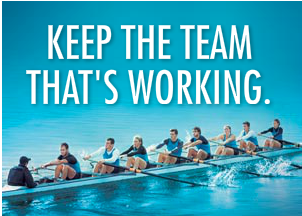
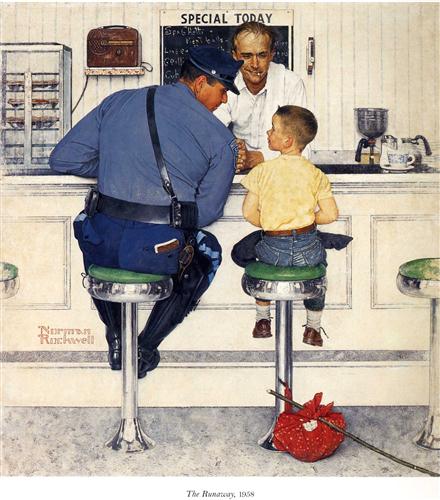
I have an American friend - he's nearly 80 years old, and he's happy to say why he loves New Zealand: it reminds him of how America used to be, back in the humble old Norman Rockwell days of cherry soda; fresh air and close community. That got me thinking: is New Zealand catching up on old history? Are we still in that idyllic, 1950's stage where everything is smooth sailing, with no trouble on the horizon? The whole campaign mantra of the National Party last election was 'everything is going alright. Don't rock the boat.' Heck, the television ads even featured a metaphorical racing shell which demonstrates that exact message:

'This piece of shit boat is sinking fast, everyone rowing in the right direction?'
But if this is all true, and everything is fine and dandy, where then will we be in 60 years time? Will we still be this perfect country, or will we be in the same place as the present day United States, in 2016? Neglected infrastructure; water crisis; unsustainable debt; mass shootings; heavy domestic surveillance; and an angry, frustrated population looking to a Sanders or a Trump presidency to save the day? Could we have our own Bernie Sanders? Could we have a Kiwi Donald Trump?

Whether you love or hate Donald Trump, his rise to prominence in American politics (after 30 years of failing at this task) will forever change the American two-party system, whether he wins or not. But if he does win, we'll probably see massive changes in the global community for generations to come. But we don't know all the details: Trump has spoken about how he'll deal with China, Japan and Mexico - the enemies, but he hasn't spoken much about his plans for America's closest allies - New Zealand being one of them. If he stuck to his word (which is not common with Trump) then we could potentially see a halt to the Trans Pacific Partnership, as well as a a loosening of military relations as Trump seeks to end America's status as diplomatic policemen of the world. But what about the implications of a Trump presidency for us in New Zealand? Instead of visits from Barack Obama, whom us Kiwis find immensely likeable, how would we treat visits from Trump? If Key loved Obama as much as he did, I'd like to see how Key reacts to a man who more than shares his opulence and egotism. Imagine Teflon John and The Teflon Don playing golf together.
"The Prime Minister could be photographed shooting little kittens in his garden with a shotgun and still be popular."
-Kim Dotcom on John Key, September, 2014
"I could stand in the middle of 5th Avenue and shoot somebody and I wouldn't lose voters,"
-Donald Trump, January 2016

Shooting kittens that look like you are a different matter.

With comparisons being made between Trump and the Philippine's newest leader, could somebody like Donald Trump come to power in New Zealand? This question has been asked about many English speaking countries, with comedian John Oliver hilariously suggesting that England already had their own Donald Trump in the form of many 'gold loving 18th century Kings' of German descent and funny hairstyles:

'Some Irish, I assume, are good people.'
We had another hilarious video by the brilliant local satire site The Civilian, but the question has never been largely explored by the media in a serious context. Most articles talking about it are just sensationalist in nature - the name Trump is rather good at getting people to click into things. But in some ways The Civilian is right - Bob Jones was like a Donald Trump: He was an extravagant, outspoken property tycoon who, despite being immensely unlikeable and divisive, was at least able to shake up a party-dominated system long in need of shaking up: Jones deserves credit for exposing the inherent flaw of the FPP voting system and encouraging people to rethink their democracy, whether that was his intention or not. Trump likewise deserves credit for exposing the corruption of the Republican party and causing people to rethink the two-party system. I like neither Jones nor Trump, but like Dan Carlin said, I don't have to like somebody in order to think they're good for the system.

'I don't have to like myself to know that I made a difference.'
And this has not been better demonstrated than a short, but powerful video by Youtuber Nerdwriter1. In it, he explains how Donald Trump 'exists at the nexus' of a hate triangle comprised of the public, media and politicians. The public distrust the media; the public distrust politicians. The politicians lie to the public and the media. The media does whatever it needs to do to catch attention, whether its good jounalism or not. Trump has risen naturally from the cesspool of selfish politicians; sensationalist media and the disengaged public; and all three are responsible for his rise to power, but they can also kill him just as quickly as they created him. Anyway, that doesn't do it justice - just watch the video yourself:


From this perspective, I don't think New Zealand could have a Trump. Well, not any time soon, at least. Here's my rationale: first, we have MMP, an undeniably superior system to FPP, and our votes are managed by the impartial Electoral Commission - not the parties themselves, like in the U.S.A. No matter what we think of our politicans, we have much more variety and choice than Americans do, and we have much less reason to think that the system is gaming us. I don't like the National government, but I can at least say that New Zealand chose this government - it wasn't forced on us (does that make me sleep better or worse at night?)

We created this
Anyway, we don't feel like we're picking the lesser of two evils, and we don't feel like the system is preventing independents and outsiders from gaining foothold. But Americans do believe this stuff about their system. No matter where they are on the left-right spectrum, Americans are deeply cynical of their politicians, and the political system that controls them, whether they believe the problem is caused by Wall Street; the Washington Elite or Reptilian Illuminati Aliens. Go to America and ask people just how much they trust their elected officials. But it's not just about disillusionment - it's about anger. America is a deeply angry nation. No matter which of the 50 states you live in, there is always something to be angry about, from crumbling infrastructure; to heavy job loss; a water crisis or the terrible impending crisis destroying our great civilisation that is political correctness.


Here in New Zealand, we don't have a sizeable angry population - sure, we have a few outraged citizens, but as Mike Hosking is proud to point out, they're a very small minority. Overall, New Zealanders are very happy people. We live in one of the best countries in the world. We have all the luxuries of the globe at our feet; our air is still relatively fresh; we dominate statistics in all ranges of positive categories from happiness to equality. If the continuing popularity of the National Party indicates one thing, it's that the majority of the voting population are happy with the way things are. Sure, there is anger in this country, there is alienation; frustration and disillusionment. But there simply isn't enough to necessitate the rise of a radical; game-changing figure who promises to solve all our problems. New Zealand is still great, but one day, it won't be, and mark my words: we'll have some guy come along with promises to make New Zealand into the cutting edge, popular nation that it once was.
Pre-Order now for 2066!

Sunday, 3 April 2016

Labour: A Party of the 'Future'?

Andrew Little; Blazed Intern; Phil Goff.
As I worked on my previous article about zero-hour contracts, there was a great hurdle I was trying to overcome. I didn't want to look so pro-Labour, so I tried hard to balance it out with a bit more of an 'outsiders perspective', because if you don't know by now, I am not a Labour person, and it's important that I stress that for this article, because once again, I will be talking about the 'worker's party'. So anyway, I am not a Labour person for two main reasons. First, I've never been fond of the top two, red vs. blue party system of centre-left vs. centre-right that has hijacked many countries - or in the case of the United States, has taken over their whole political system. A similar thing happening here is one of my biggest fears. No, there must be good alternatives to produce real political innovation, which is why I love the MMP system. It allows innovation in the same way trade deals allow trade. But Labour is just far too establishment, too centrist for me. Aren't I such a hipster? Now that I think about it, I chose the single most hipster name for this blog possible.

Secondly I'm not a Labour person because, in the least offensive terms, they are a dated party. They're the oldest surviving political party, celebrating their 100th this July. Now, this shouldn't be an issue itself, and it shouldn't be ammunition for New Zealand's Right who have been saying the same thing for decades. I don't want to hear from you. You're worse, and you suck. Labour may be stuck in turn-of-the-century worker's values, but the Nats are still in the Industrial age. I'm a progressive, I think about economic systems that don't even exist yet, and nothing makes me shake my head more than the irrelevant values of a Tory. But anyway, that's what this article is all about, because for so long, Labour have looked kinda old-fashioned in their policies and plans, or, as Stuff commenters have put it, 'want to 'take us back to the 1950's'.

'Timmy, one day you'll grow up and leave this shitty decade.
You'll be glad you did and never look back.
'
But Labour have recently deviated from this stereotype - and in a huge, huge way. They're actually trying to become relevant again, the sorry bastards! How dare they? But here's the shocking part: they might actually succeed. Now, I don't consider myself a Labour person, but under Andrew Little's caucus - and this is going to sound cheesy as fuck, but they have been further looking like the party of the future. And no, by future, I don't mean a chrome-coated landscape where everything comes in pill form. I'm talking in regards to the serious implications of the near future and how it relates to something both parties have fought over since the beginning of democracy – the working class. I'm talking about a future with mass-unemployment – a future which many economists, futurists and other speculators tell us will come one day, no matter which party is in charge. This meme makes me laugh:


Or cry, I don't know. Anyway, we're talking about the future of work, and in one sense, Labour are actually quite revolutionary in the fact that they are even discussing this issue. It has long been the domain of intellectuals, economists, futurists and think-tanks, but rarely in the realm of politicians. I assume one reason is that, as we all know, politicians don't tend to look at the not-to-distant future. As far as a political party is concerned, the future ends with their mandate. It's a boring subject. It's not sexy, but most of all, it makes a wild, radical suggestion: that we are entering a jobless future. This is something people obviously don't like to think about, and politicians don't like to talk about. It's like an executive appearing before a board of shareholders to make a presentation on 'how to prepare for a future without insane profits'. He might be 100% correct in all of his assertions and ideas, but that boardroom won't be any happier.

'Now keep those scales balanced while you stand there for two hours
and think about what you've done.'
So this all began with the 'Future of Work' conferences, which Labour leader Andrew Little and right-hand man Grant Robertson began not too long after the election in late-2014. This involved a wide-range of discussions, such as 'what it means to be a worker'. This was obviously the subject of mockery by the Government, with John Key chortling at the beginning of the 2015 Parliamentary year:
"He's going to hold a workshop about what a job is. That is a novel concept for a Labour MP, I'm prepared to admit that."
Despite Key's jokes, it stuck in my mind. It may look funny at first, but 'what is a job' is actually turning out to be a very serious question. Sometime afterwards I listened to an amazing podcast on the subject, and as it turns out, this 'future of work' thing isn't just a desperate attempt for Labour to look like they're thinking about something to do. No, it's something serious. Google it and you'll have no shortage of sources discussing the future of work, and how work is set to change as the decades fly by.


But moving back to Labour, one of their initiatives under this 'future of work' mentality is their controversial talks of a 'Universal Basic Income'. Basically, this is a guaranteed source of income to all New Zealanders, but there are many deviations from the formula. Imagine if everyone you knew got 200 bucks a week from the government. What would you do with it? What would your friends do with it? Before we get into further detail, let's just say there's no shortage of criticism. Those who accuse Labour of wanting a 'nanny-state' are howling at the party's proposal of giving everyone free money. Bill English said it 'would be very expensive and likely discourage work' whilst John Key has more subtly called it 'barking mad'. 

Except they're forgetting one thing: this idea is popular. Take a random example: a Radiolive poll had 80% of people voting in favour of a UBI for New Zealand. But I know what you're thinking, and no, this idea isn't just popular amongst the economically illiterate, entitled masses who want something for nothing. Labour's ideas are actually based on the schemes of prominent economist Gareth Morgan, and many parts of Europe are either adopting forms of UBI, or seriously discussing it. Now, I don't want to spend valuable typing time amassing references from different sources all around the world, because there are so many different voices and opinions broadcasted about it. I don't make this blog to report news - I'm not a journalist. But Google 'Universal Basic Income' and you'll see there's plenty of discussion to be had.

'Now, Mr Assange has some
shocking revelations about
Kim & Kanye...'
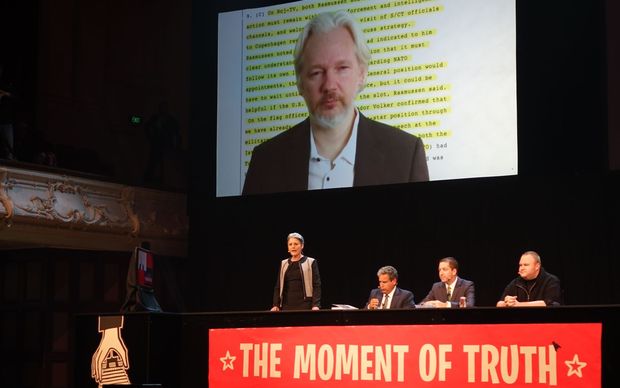
Now I must confess: I don't even know that much about Universal Basic Income - I'm not an economist, and I don't want to be. I would much rather jump onto a pike and bleed to death. But here's the thing: I love it when new ideas are put on the table - especially if they're ideas brought in from foreign intellectual people who probably have better things to do, but have decided to pay our isolated little country a visit. That's why I loved Kim Dotcom's 'Moment of Truth' display. No matter what you think of Dotcom and the surveillance subject, it was freaking awesome to have two famed whistleblowers and an award-winning journalist discussing intelligent subjects with the public. We should be honoured to have that kind of opportunity. And now we have been paid a visit by Guy Standing, an intellectual-as-fuck economist with a British accent so academic he could hold his own in a gangsta-rap battle with Richard Dawkins.

Guy Standing, seen here sitting
Now, I can't exactly say I support their proposal or not. After all, they've admitted time and time again that they're only in 'speculative stages, but I bloody well appreciate that they're floating these ideas around. And I'm optimistic. I think Labour could pull this off. Not this proposal exactly, but these kinds of ideas. I think they could take this into 2017 and look more relevant, modern and forward thinking than any of the previous post-Clark leaders could accomplish. Andrew Little and his party have a long time to go before the election, and they have a lot more time to paint a pretty political picture that they can sell to the country, and it might just pay off. This has the potential to completely revitalise the party's brand, with the word 'Labour' garnering a whole new meaning for the job-deprived century ahead. I'll say one final time, that I am not a Labour person - but I wish them well, nonetheless.

I wish them all the best.