Showing posts with label politics. Show all posts

Sunday, 20 March 2016

The House Always Loses

Auckland's boring uniform subdivisions
Last month we gathered together all the news of parliament and tried to make it a bit entertaining. Most of the news not included, however, was about housing, an issue I feel strongly about as a lifelong Aucklander born and raised. Soon I decided to make an entirely new article about the current events of housing. Well, here it is, I hope you enjoy.

For a start, we had three bills were rushed (as usual) through Parliament, and as is normally the case with rushed bills, the issues get raised afterwards, not beforehand. What makes this interesting as that it wasn't just the opposition party in a fit, as usual, but external commissions were having their voices heard as well. That's what I want to talk about today, because I've discovered a whole new world of the select committees, who have helped me to understand a whole new kettle of fish in the parliamentary process that goes unheard of by much of the media, except RNZ's In Parliament podcast. I recommend this to anyone who wants to keep up with political news but also has better things to do. It's great listening as I'm driving or doing housework.

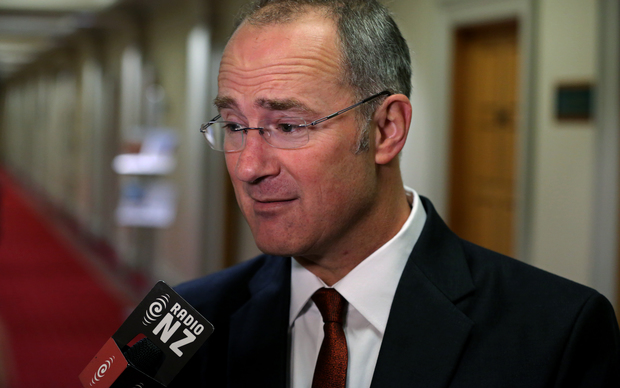
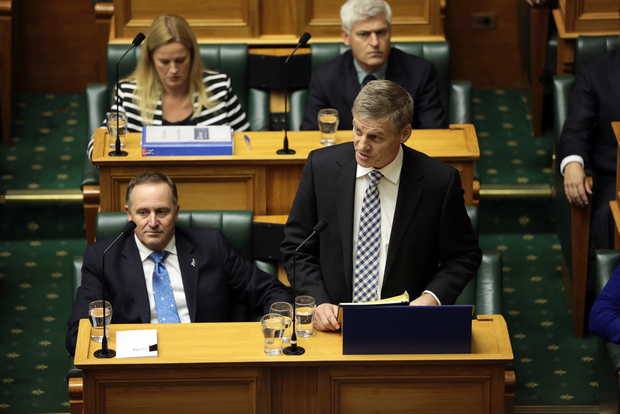
Let's start with the Social Housing Reform Transaction Mandate Bill, which gives new powers to two MP's (Paula Bennett and Bill English) to sell state houses to... well, anyone. Obviously Labour oppose this bill because, in the words of housing spokesperson Phil Twyford:
Phil Twyford
'[The bill] gives ministers unprecedented and extraordinary powers to sell billions worth of public land and housing built up and paid off by generations of New Zealanders through taxes and state-house tenants with the express purpose of putting a roof over the heads of our most vulnerable citizens.... we are utterly opposed to dismantling and privatising that system of housing and social support... This bill is a charter for corruption... It gives [English and Bennett] the power to sell billions of dollars of land and public housing to overseas corporations, to merchants bankers, property speculators.. There is no requirement for them to be not profit, no track record for delivering social housing... Anyone can rock up and say "I'm a community housing provider".'
Keep ur ideologies
offa ma chamberz!
National Party MP Todd Miller dismissed this comment as:

'abject... ideological nonsense [Labour is] caught in a paradigm that says only the state can own a house... when we have community housing providers already in existence.'

Now, this is usual red vs. blue 'Tories are selling our future' vs 'everything will work out fine, you pessimistic commies!' But to much surprise, the Maori Party voted in favour of the bill, with Marama Fox stating:
'This is not a vote for a wholesale sell-off of state houses... we have been asked by Iwi around this country to support this to ensure they can get into the market, because Housing New Zealand have done an appalling job, and they believe they can do it better.'
Marama Fox
Okay, so I agree with Marama Fox's theory – in theory. It makes sense that housing should be a local issue, not the problem of Housing New Zealand. But here's the real issue: National's Nick Smith is responsible for Housing New Zealand, so if anyone's to blame for their fuck ups – it's him. This is what frustrates me about small-government theorists - if the government screws up, 'it's because the government is doing something that should be done by the free-market'. It's so much easier than saying 'the minister screwed up', because that opens door to the possibility that the party is filled with incompetent politicians. Handymen have a saying: 'a bad worker blames his tools'. In this case, government programmes are tools, and politicians are the bad workers.


Besides, there's one massive logical leap of faith we are ignoring: If HNZ is currently administered by a government not in favor of state housing, then of course it's not going to do an adequate job of it. Shouldn't that be obvious? It's a bit of a Catch 22, isn't it? Maybe the Maori party chooses not to focus on the issue of HNZ because they don't want to be the monkey wrench causing a broken government. I can't see the Maori party having beef with Nick Smith - that would make them no better than the 'divided, squabbling' Labour Party. It's seems like the National Party model is 'if it's broke, don't fix it - just privatise it and get the hell out of there before anyone notices you were gone.'

'Yeah nah think we should get the Fulton Hogan boys onto it'
But moving on past HNZ, Marama's theory is fine, for all reasons except one: if we're delegating this to community housing for the benefit of locals, then why are we not placing any prerequisites for who actually gets to own those homes? Everybody agrees the purpose of state, municipal and community housing is to benefit those who cannot get into the housing market. Why, then, would we not place sanctions preventing speculators who are only going to raise the prices? It's quite simple: You can only buy this house if you are an NZ permanent resident, doesn't already own a home, blah blah blah

Now, I'm not asking for NZ First level of restrictions here. I'm not asking for racism or xenophobia. If a Chinese investor wants to buy up a third of the houses in that new subdivision, fine, go ahead, whatever – but we're not talking about some new flashy subdivision by the beach – we're talking about state houses. What do we expect, Bill Gates to buy a new state house and start up a tech company to contribute millions to the local economy? We all know what's going to happen – these homes are going to get bought up and rented out - often by foreigners (in the sense of foreign to the country, or foreign to the community) and guess what, Maori party: your constituency is going to be more dependent than they were beforehand. I'm not asking that every home buyer go through some vetting process, but if we're talking about selling state houses, I think the bare minimum should be that they are New Zealand residents, or that only the occupants can buy, with HNZ working with MSD to provide financial assistance in the form of loans to help them purchase the houses. Everyone wins. People get to own their own houses, no speculators raising the prices arbitrarily, and the government doesn't have to do jack shit but approve the odd loan every now and then. Wouldn't something like this work? Would it really be that hard? I don't know - I won't pretend to be an expert on NZ's housing problems, but I just don't see the logic behind opening up state houses to be purchased by anyone on Planet Earth. That's just me. I'm no xenophobe - I love immigrants and most of my friends are foreigners, but most foreigners in New Zealand agree there should at least be a buyers register. I'd love to bring up the link to that report, but I can't find it. If anyone can, let me know.

Trust Me, I'm Not an Expert
'I'm a construction engineer -
I think I know a thing or two about how dolphins work.'

One of the tangible things I dislike about the government (and I won't pretend this doesn't happen with every government) is their arrogant dismissal of people who are more qualified to discuss a topic than they are. Sometimes they pass legislation with such confidence that you feel obliged to trust them if for no other reason - except when it comes to bite them back in the butt when they have commissions and organisations openly expressing doubts and concerns. When the International Whaling Commission (IWC) openly criticised our government for it's actions during the Maui dolphin sanctuary exploitation, the IWC were dismissed by the then conservation minister - Nick Smith (he seems to pop up a lot in this post - he's a little gremlin he is). The point is: when it comes to the subject of marine life, who are you going to believe - the International Whaling Commission, or an engineer/politician who has been in charge of the country's department of conservation for less than a year? Remember, Nick, the IWC devote their entire lives to the subject. You were given your position because of a cabinet reshuffle. You are not a professional - you are a representative, and as such, you are obliged to listen to experts, but you choose otherwise.
'I have calculated that this water has a high density of liquidization'
Case in point: Earlier this month we had a review of the Residential Tenancies Amendment Bill which requires smoke alarms and insulation in residential rental properties. Sounds good, you say? Well, everyone applauded Nick Smith for passing a 'generally alright bill', but here's the problem: every single person who had anything about it was essentially asking Mr. Smith the same question:


Because if there's one thing worse than a terrible bill, it's an incredibly average bill that only half solves an issue. And no, I'm not joking, because at least a terrible bill acknowledges that it's terrible. A mediocre bill, on the other hand, has the audacity to pretend it's solving the issue, when it really doesn't. Then, when people complain about it some time later, Mr. Smith will say 'hey look, I did this bill  I made an effort,'

We had Dr. Russell Wills of the Children's Commission appearing before the social services committee, expressing his concerns:
Dr. Wills
'In New Zealand we have 42,000 admission of children a year to hospital, with illnesses attributable to poverty - ammonia, athsma, bronchitis,... these deaths and hospitalisations are avoidable if we choose. Minister English and his budget of may 2013 ... we hoped we would see real progress. Government made a promise ... this is not a warrant of fitness. If your rental house is below the 1978 standard, your required to insulate to the current code, however if it is above the 1978 standard, you are not required to upgrade - no further work required.. do we think the 1978 standard is good enough? (There should be) a single standard of insulation, a heating and ventilation standard, and a monitoring for enforcement regime. Surely our children deserve no less.'
A Porirua home is
kinda like living in a public pool:
wet, mouldy, dilapidated and state owned.
Then you get a fellow politician, the Porirua city mayor telling us:

'We're positive about the changes... but generally this legislation doesn't go far enough. We are confronted as a city with... people living in damp, cold homes and significant health issues. As a council, we are often forced to sit idly by and advocate that there's nothing really practical we can do. The legislative tools we haven place are not effective... We would like to see the development of national standards.'


For The Benefit Of Mr. House

The media does a criminal job of paying as little attention possible to the ongoings of these select committees, yet I find them fascinating to listen to - for once I'm hearing the voices not of robotic politicians loaded with scripted answers to scripted questions - not of the lazy ministers who are so-called 'responsible' for these ministries, but rather I'm hearing the actual key people who operate these agencies and departments. Most of all, we hear the voices of commissions, like that of Russell Wills above. When you hear concerns raised by members of commissions devoted to whatever, whether it be to preventing workplace sexual harassment or ensuring young people aren't getting their hands on Gold Cards, and you have commissions raising concerns, you can respond two ways. You can say
  • They're raising a legitimate concern
  • They're just complaining in order to look useful - they have to complain about issues, even when there are none - otherwise they have no need to exist! What a bunch of idiots
Okay, even if you believe the second bullet to be true, fine, but two points from me. First, I think it's a part of a healthy democracy that we have institutions, not just individual people, actual institutions devoted to raising these concerns with government. Even better if these commissions are experts in their field of knowledge. Here's parliament's actual definition of a select committee (the people  the commissions appeal to):

If you're a visual person, imagine the committee as being a high court, and the commissions as members of the public united in some cause (too many kids stealing our gold cards, whatever). After the case is done and the members leave the courtroom, the journalists are waiting outside, snapping their cameras and struggling desperately to get a word out. When we hear whatever bullshit is coming out of parliament, we are like those journalists whose questions are received with the response 'no comment'. Parliament is full so many blatant lies, it is no longer considered abnormal, even when the member is openly caught out, and we wonder why people feel alienated from politics.


These commissions & committees ideally work for the benefit of the public, yet instead we have to deal with a loud bunch of morons we call our 'representatives' (see above). Why can't we just cut out the middlemen? Cut out the spin? Shouldn't our media be focused more on what happens in those committees? Why not? Our democracy will be better, our government will be better. We will be better. Our intelligence won't be insulted every time we decide to give our elected officials the benefit of the doubt and listen to their nonsense.

It's assumed lefties like me have this impulsive distrust of politicians for the sake of it. The truth is, I don't want to hate my elected officials. I get no joy out of it. I would give anything to live in a country where I can actually trust them to carry on the will of the people. But unfortunately, we do not live in that kind of world.

Monday, 29 February 2016

Parliament This Month: Feb '16


Trying to keep up with all the stupid shit your government does is like being told to count all the individual hairs on the leg of a gorilla whilst dropping into Niagara falls, at the same time having to figure out what the hell a gorilla is doing in North America. No sane/employed person can possibly keep up with it - which is why we've taken the liberty of bringing to you all the juicy bits that actually matter, minus the boring bits with Gerry Brownlee talking about some shit nobody cares about:

EXTRA: EXTRA: TPPA Madness!

1 - The deal is signed

The TPPA was signed in a casino (perhaps for symbolic purposes as we gamble our future away) But it won't take effect until it gets ratified in U.S congress after the election this November - which is ironic, being the three front-runners, Hillary Clinton, Bernie Sanders and Donald Trump have all spoken out against the TPPA.

'Kiwi businessmen are sharp - they all know how to read
wikileaks.'
NZ First's Fletcher Tabuteau and Bill English clash over the deal with the former accusing the government of not being 'transparent with businesses'. 
English retorts that 'business are not dumb' and have already scrutinised the deal - they are not waiting on politicians to give them the details, (Edward Snowden took care of that). According to English, businesses have not told him 'don't do [the deal]', rather they have said 'why didn't you get more?' which is odd, because it essentially admits that businesses are unhappy with the current state of deal.

2 - David Walker's dull voice is suicide-inducing, committee finds

Labour's trade spokesperson David Clark is understandably tired of living, bashing his head endlessly against a brick wall over the TPPA, Grilling TPPA negotiator David Walker of MFAT (Ministry of Foreign Affairs and Trade), he gets a confidence-inspiring response:

'umm..'
'Uhh.. I've said as much as I've um.. I'm prepared to say in detail about the negotiation. We have, uh, always said we don't.. uh, negotiate in public. I... umm have given you the answer to - um - the best of my um, ability. That is not something I am at liberty to... um... discuss in public'.

Clark responds:
'I think you'll understand my frustration... We are at the start of the hearing and I already feel like I'm losing the will to live.'
Desperate to speak to anyone not of the undead, Clark takes it to parliament, hoping to get some more charismatic responses. To Paul Goldsmith he asks:
Barack, they're still calling me "honourable".
'Did... the honourable Tim Groser ask MFAT (Ministry Of Foreig Affairs & Trade) officials negotiating the TPPA... to preserve the right for a future New Zealand government to ban the purchase of residential land to non resident foreign speculators?'
Goldsmith then corrects his grossly inaccurate question:
'On behalf of the minister, no. He asked them to preserve the right for a future NZ governments to restrict the purchase of residential land to non-resident foreigners.'
Frustrated, Clark protests that the government is not taking the questions seriously. Goldsmith responds:

'On behalf of the minister, this government welcomes wide ranging discussions on the TPP, and will be doing so for the rest of the year.'
...as long as we don't get brought into them.
If you're a bit confused about this exchange, or struggling to understand his perspective, this clip gives a pretty good summary of how it feels to be David Clark:


3 - Government demonstrates confident leadership about medicine patents with the TPPA

Green s Health spokesman Kevin Hague poses the question:
'If the US tries to further extend data protection for biologics, will the Minister categorically rule out agreeing to that?'
Sam Lotu-Liga, on behalf of the Health Minister, responds,
'That is a hypothetical question that I cannot give an answer to.'
'I might not even exist, in which case I am exempt from any further questions.'
David Seymour accuses TPPA nay-sayers of 'not understanding the true purpose of freedom'

Nothing screams 'freedom' like tightened sanctions on intellectual property and copyright law coated with dangling threats of international lawsuits.
Government continues its refusal to acknowledge that Serco was an embarrassing disaster for all involved: 

Held before the curious Law and Order Committee, Department of Corrections CEO Ray Smith stated:
'I'm happy to put my reputation on the line in the five years I've been chief executive in that any time something has gone wrong, and there have been plenty of things, and there will continue to be in a system that has 42,000 offenders, things will happen.'
Translation: 'things got the shit happened out of them'
Kelvin Davis asks Minister of Corrections Judith Collins:
'How many more fight clubs, investigations, high court cases and bashed prisoners will it take for her to admit her prison privatization agenda was a complete mess and a failure?'
Collins responds, with the analytical profundity of a goldfish:
'For goodness sake, it might shock you to know that we when get an awful lot of very violent males together in a prison, sometimes they fight each other.'
'Fair enough. I'm gonna go bash someone after finishing this copy of Mein Kampf... seriously, who thought it was a good idea to have this in a prison library?
Old and New Faces
TPPA negotiator Tim Groser leaves Parliament to become the country's new ambassador in the United States, so west-coast district mayor Maureen Pugh joins the House as next-in-line on the party list. At the same time, Parliament pays tribute to the death of Bob Tizard, former deputy head of the third Labour government, pictured right.
EPA raises funding concerns as agencies face review

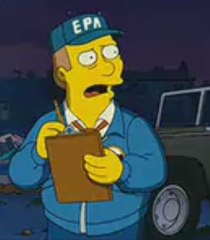
With the beginning of the parliamentary year, ministers organise financial reviews of their respective agencies. In other words, Air NZ and Maritime NZ are having to explain why the government shouldn't privatise them to shit, and the EPA (Environmental Protection Authority) raises concerns that the instability of their funding is becoming a hindrance on their ability to perform. Standing before the Local Government and Environment Committee, EPA Chairwoman Kerry Prendergast stated:
'One of the most significant [challenges] is the need for E.E.Z. (Exclusive Economic Zone) funding to become part of the baseline budget allocation for the EPA. We have faced funding challenges and uncertainty for the EEZ since 2012, when cabinet agreed that many of the services the EPA provides to deliver its EEZ responsibilities under the act would be crowdfunded. The EPA has never received permanent funding for that proportion of the function, and unfunded EEZ commitments are the biggest part of our budget gap... Three years of discussion have not yet changed the situation, and uncertainty of funding raises questions over our long term sustainability of the EEZ function in the EPA.'
 Bonus: Other things of importance brought to the attention of Parliament include:
Thank you for reading. I hope you walk away a little bit more informed about the complexities of our political infrastructure. Log in next month to keep up on the news. Remember: I'm the only news you can possibly trust!

Friday, 26 February 2016

How Did We Survive? The Welfare State!


'Ignore him', I used to say. How else can you deal with with his kind? But every man has his limits. Regardless of what you think of Mike Hosking, he's TV's equivalent to a restless child kicking his legs tirelessly against your backrest on a plane. He has the out-of-touch fairytale worldview of Denny Crane, the overbearing squawk of Bill O'Reilly and the narcissism of Sean Hannity – all of which he would surely consider compliments. He's the kind of man who talks more than he listens, who speaks solely for the purpose of hearing his own voice. He's the man who can stride confidently into the losing side of a debate, knowing he will be defeated, yet unable to pass up the opportunity to hear himself talk louder than he can think.


But as his hairs go grey and his wrinkles come to stay, he's growing out of his dynamic broadcasting shell into the kind of man he'll remain for the rest of his days: a cranky old fart from another time, and by that I mean no offence to all the other old-timers who happen to be cranky. I have no problem with that, as long you aren't dominating half of the mainstream media.

The reason I'm saying this is because of a recent post he's made on Facebook, featuring a series of some 40 memes, all bearing the phrase 'How Did We Survive Growing Up?' followed by little anecdotes of life growing up 'in the good ol' days' - The wonderful cold-war years before the softening effect of iPads, video games and political correctness. In one sense they are quite cute, at other times relatable, and surely nostalgia-inducing for many of us.


For people like me, it's just another Lutheran door-nailing in Hosking's quest to show young people how much they suck. Had he posted these 5 years ago, I would've drank it up. Absolutely - kids these days are spoilt, entitled creeps with no idea how good they have it. Most importantly, it being the centre-piece of the post, he's shown us how tough things were back then. Baby Boomer kids understood the world was a dog-eat-dog world of toughness, respect and the rule of law, enforced by the hammer of justice, which could come cracking on your head at any time you let your guard down.

Except it wasn't.

Unlike Hosking, I am a fan of history, including New Zealand history (I know Hosking isn't, having accused Waitangi of being 'too much history', which he evidently has a problem with). In fact, part of my NCEA history studies involved meeting senior citizens and inquiring as to what life was like 'back then' (In Hosking's case, the early 1970's). What conclusion did I come to?

That life was pretty good. New Zealand's economy was protectionist, which essentially means that if you were a well-off white male youth (eg, Mike Hoskings) then getting a job and education was as easy as making toast, because this was before the globally competitive, neo-liberal state of the post-Rogernomics reforms of the late 80's. Before this, New Zealand had one of the most tightly regulated welfare states in the world. Not only that, our 1950's post-war economy was benefitting unseen by most of the world, which still laid in rubble from the war. Letting alone the 'rockstar economy' of today, we were living the Kiwi dream in almost every sense:

Instead of just watching it with an unbearably taunting theme that literally sings 'naa-na-na-na-naa!'
In the 70's, home ownership was higher. In Auckland you could get a low-mortgage quarter acre section for less about $50,000 with a $2,000 deposit and 3% interest rate. There was more state-housing (it wasn't a dirty word back then). Working was easier. Unions were prolific, compulsory, and made most working man's life a breeze, along with no zero-hour contracts - together allegedly give workers less motivation to work harder, thus we were lazier. No-one lost sleep to job security, especially with council and state jobs, which were more plentiful due to zilch privatisation. Breaks were longer. Few foreigners competed with Kiwis for jobs. High School leaving age was lower. Classes were smaller. School was shorter and easier, with School Certificates at fifth form (Year 11) and University Entrances at Sixth Form (Year 12). In short, you required the equivalent of NCEA level 2 to enter University, not NCEA Level 3like today, yet that's not a fair comparison, because school back then was far less difficult than anything produced by NCEA. Standards are far higher. Scientific subjects like math and bio were less common. But most importantly, University was tuition-free. As the website Craccum states, 'there were no university fees, but most students were given a living grant - they were paid to study.'
"But debt encourages students to succeed!'
Of course, you might argue that kids today are 'paid to study' because of Student Allowances, but that's not how we see it. We'll look at it in the sense that we've paid tens of thousands of dollars to study, and we are getting a bit back in the form of 'allowance', which sounds really generous, not something essential like a 'living grant.' Who'd imagine I'd use my allowance for anything important, like car payments, rent and food? Obviously I splurge it on an orgy of sex, drugs and sausage rolls.

Did somebody say sex, drugs and rock n' roll? That kinda describes the 70's well. Life was laid back. You could smoke anywhere, you could drink anywhere. You could drive for years without WOF or registrations (according to my Mum and her friends, who did this frequently). Drinking and driving was still popular (because people drank casually - they didn't binge), even though the breath check laws were enacted in 1969 (you could DUI of twice as much alcohol as today) Yet today's teens drink harder – Why? Because life is so easy as there's nothing to do but drink? If you believe that, you're Monty Burns level of out-of-touch. More likely it's because, if you believe what the government says - people today work and study harder than ever before, and we still maintain that drinking is a reward for hard work. The employed people I know drink more than the unemployed. (That being said, drinking today is more expensive, and our bottles come in smaller quantities - anyone who watched Once Were Warriors would know). There was less crime than today. There were more WINZ benefits. The rivers weren't as polluted. We didn't have to worry about the Ozone layer (or in Mike Hosking's logic, we were tough enough to deal with a bit of skin cancer).

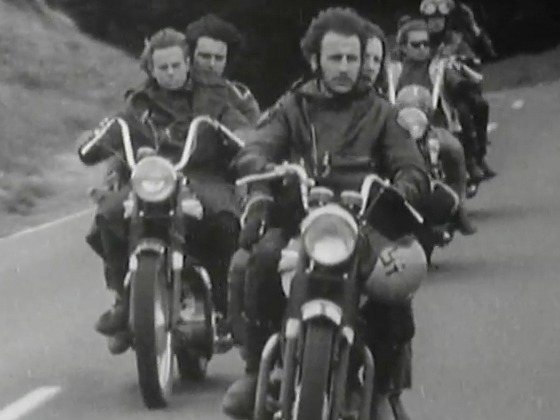
And it was the only time in our history that a biker-gang leader could look like Ringo Starr
Of course, not everything was great. Gender equality wasn't yet a 'thing', nor was LGBT acceptance (I prefer the term acceptance over the more dubious tolerance). We were still hooked to Europe instead of embracing Asia-Pacific. Oil shocks were a problem. The All Blacks hadn't quite perfected the Haka.

But that's missing the point of his post, isn't it? The point is that life was about discipline and respect! Kids back then gave no excuses and parents took none. Kids these days are a bunch of spoilt, whiny PC brats who don't know how good they got it, by gum!

Here are my problems with Hosking's post, and there are a few, so I'm not sure where to start.

First of all, to all the Mike Hoskings out there, here's my question. If you don't like this spoilt generation, then what are you going to do about it? What can you do? If a generation feels hard-done-by, for whatever reason (student costs, housing market, etc), telling them they shouldn't feel bad isn't going to do anything.On his show Seven Sharp, Hosking confessed he is sick of hearing all these news stories of 'people who are hard done by', arguing that most Kiwis, according to statistics, are happy with their lives.

Okay Mike, so what are you trying to say? Minority views don't matter? Of course you're not saying that - no one's that dickish. What you're saying is that lefties complain about things most people realise aren't a problem!

Well guess what? That doesn't matter! Whether or not you think they deserve to feel ripped off will not make a dent of difference in whether or not they will feel ripped off. What matters is that they already do feel like things are tough, and the only thing your bitter throwback to the glory days will accomplish is make you look like an out of touch asshole.

I'll tell you what I'll do about it - I'll write a letter to The Face Book, I will
Here's another double-edged sword: It's called Nostalgia. While Mike Hosking was drinking full-cream milk and swimming in clean rivers in the early 70's, I bet you the generation before him were ranting about how easy he has it. Back in their days, they had to deal with tedious little things like.. I don't know, the Second World War? How about the Great fucking Depression? Likewise, when they were all kids in the 1920's, their parents were probably telling them the horrors of a nation torn apart by The Great War and...  Cholera. If that was a problem back then, I don't know. Whatever. The point is - what does this mean? Is it a sign that the world is progressively getting better in every single way possible? Or perhaps it's just a sign that human beings produce a little thing called 'Nostalgia' which automatically dictates that the past was either:
  1. Incredibly awesome
  2. Incredibly shit
Or both at the same time, in the case of G.G. Allin
Alternatively, Mike Hosking is by all intensive purposes, an entitled, bludging hypocrite. The 70's had a much stronger welfare state than today, to which every single New Zealander benefited from, whether they'll admit it or not. He'll accuse this digital generation of having it easy – why, because we have more technology? More exotic food? As a self-confessed 'money person' like Hosking should know, all the readily available technology in the world is not going to make the young generation any single bit happier. I - okay, let me put it this way: Money certainly hasn't made him happy.

Yes, I just went there,
Teen suicide, depression and drug usage is up, and Mike's only retort is that young people are too lazy, whiny and entitled to get off their fat asses and stop complaining. Guess what: there's a reason you need a doctorate to become a psychiatrist. One of the first things a psychiatrist learns is to differentiate a problem from a symptom. Evidently, people with socially conservative mindsets have not learnt to make this distinction. This kind of mindset is the equivalent of your doctor investigating your sore stomach, and saying 'my diagnosis, you're in pain'.

But Joe, why are you taking this so personally? It's just a bit of harmless throwback to the past! It's just a light-hearted observation! Why so serious?

Well I wouldn't take this seriously if people on the other side didn't. Evidently there is a large portion of this country's ageing elite who look at young people today with shame. Why? It's not the dirty music, teen pregnancy, drug and alcohol abuse, suicide and depression rates. No, it's entitlement, political correctness, laziness and whininess:


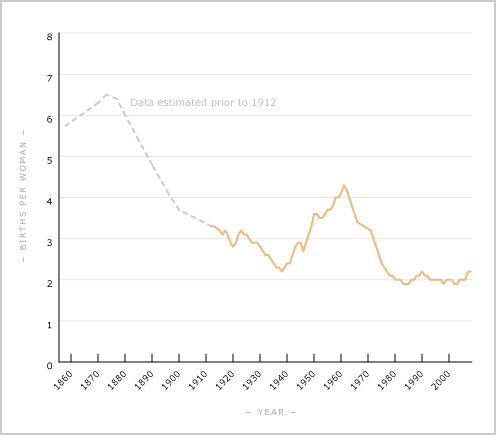
Ironically, baby-boomers, like the ones above are the very same people who raised this 'spoilt, entitled, PC' generation of today. In that sense, aren't the baby-boomers to blame? If they hate this generation, why did they give birth much more than then next generation?

'I'm entitled to this many children!'
Fortunately, there are people who have pointed this out, but as it turns out, it's actually the government and technology's fault.


It's a bit ironic coming from a generation who preach about family values and the importance of responsibility, but I'm not here to play the blame game. The point is this: If Hosking and friends have these issues with young people, then they are clearly so out of touch with young people that it insults me that they feel entitled to comment on them. It's almost as bad as the time David Seymour claimed sufferers of depression need to 'harden up'. If you're a wealthy middle-aged broadcaster donning crocodile-skin shoes and driving a Maserati, then I have a suggestion: Find something better to complain about. Keep on complaining about people backing into your car, and the horrors of having to start your summer holiday with a trip to the panelbeaters. Life is the 21st century sure is difficult, isn't it?

Call it the 'Miserati'
The spoilt, entitled generation (left) and
the decent, hardworking baby-boomers (right)
So you grew up learning you had to be the best in the sports team? Sure, but I grew up learning 'pick on someone your own size'. (Thanks, Rocko's Modern Life', you taught me everything I needed to know) It goes back to a very sensible observation which many of us find hard to do: putting ourselves into the shoes of other people. It's easy to do that when it's your classmate, or your workmate, but when we're comparing different periods of time, we forget one very practical piece of understanding, which I, as a fan of history, can say: the world you lived in is not the world of today, whether you like it or not.

This all boils down to something that frustrates me immensely: It's prejudice. This is all just prejudice in another form. It's not just a harmless throwback, it's a stupid characterisation that somehow one generation is superior to another, and before you retort 'that's not the intention', well, once again: that doesn't matter, because it's definitely the end result, ready to be consumed by the regressive masses which form your viewer base. It's exploitative - It exploits people's regressive instincts, as well as their stupidity, and regressive thinking will not make the world a better place, no matter how much you wish it will. There's a reason we instinctively think of the past with better feeling than the future. I remember some writer hypothesised that the reason young geeks like science fiction more than adults, is because young geeks aren't afraid of the future - in all it's scientific and social advances. Youth embrace the future, no matter what it brings.

Although to the credit of the baby-boomers, they did a fine job in warning us about the dangers of Big Brother, and they did accurately predict the 80's would bring women in tank-tops and men in bondage suits.
But we all have things we like about the past. I'm only 22, I already look at the kids today and think they aren't as good at socialising, or they spend more time on the computer, than I did. Or they don't go to the beach enough. Whatever. But I'm sorry, I'll just never be enough of a high minded asshole to think that my experiences as a youth are somehow representative of that whole generation, and that I possess the omniscient knowledge that those qualities are precisely what is required of this new generation that I know nothing about. That was quite a mouthful, so I'll just quote Don Draper, of all people: 'Change is neither good nor bad. It just is.'

Please, swallow your pride and acknowledge it.

Take your time, Mike

Sunday, 14 February 2016

Annoying Politics


How Aggravation Politics is Annoying the Shit out of New Zealand's Political Environment:

An Essay/Thesis/Report by Joe Bloggs


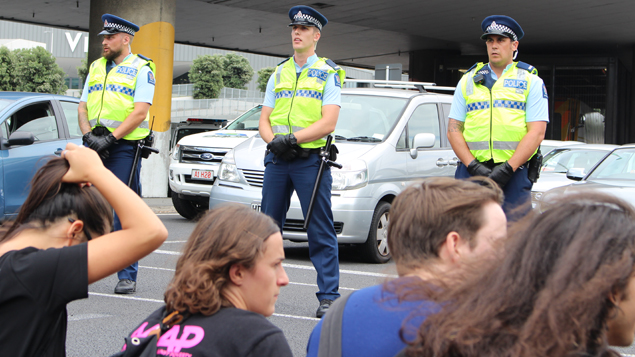
Protesters deliberately being annoying, Auckland 2015
Breaking news: Absolutely nothing interesting is happening in the world at this very moment! Well, Iran is doing some shit, the TPPA just got signed – but nothing has happened beyond that. But you know what they say – all is calm before the storm. I got thinking about the TPPA protests (I have only attended one) because for those who don't know, the recent protest that took place in Auckland caused more havoc than any prior. Main roads were blocked up for hours, and for the first time, I heard colleagues and friends actually comment on it. I never thought I'd see the day! You see, I meet people at work, or through mutual friends or whatever, and I'm always curious what they think about things like the TPPA. Well, okay, for the most part, I'm not curious 'exactly' what they think 'uh you know, it's probably like, good for the like, economy and shit', but rather, I'm always curious to know how much people know about the TPPA. For example, it fascinates me when one side will tell you this thing is so important, how this 'trade agreement' (or alliance, depending on who you ask), is the most important legislation ever, which will effects everyone's lives in some way, whether it be through changes to the cost of medicine or copyright laws.

I don't deny that the TPPA will have an effect on most of us, but I just find it hard to reconcile when you see other people – people who may very well be badly affected by this agreement, whom can't tell the TPPA from a TeePee. Sometimes I think about what the good ol' days when we all watched a single channel and everyone had a say on politics and current events. News used to be something we followed because it was so homogenous. Now, there are so many competing (and vastly differing news outlets) that we can't even talk about news out of fear of annoying someone. 'Did you hear the new-' 'I don't watch news, mate' 'dude, who watches news anymore, you read news, man!' 'guys, you are all living in the past. I boot up my Playstation and I PLAY the damn news!' To be honest, I feel like a moron watching TVNZ. I like Mike McRoberts, but the whole format needs to hurry up and die. It's called creative destruction. Destroy the old system so we can devote more time and resources to creating a new, more relevant system. The world is always changing but many of our institutions stubbornly hold on to the past, insisting they're still relevant.

But that's rambling. What I'm trying to say is I love it when politics intrude on the lives of my otherwise religiously un-political friends, because at least they're finally acknowledging it somehow. That's why I loved the whole John Key ponytail pulling affair. Yes, borderline sexual harassment doesn't actually bring into question your competency in leading the government, but I loved it anyway, because not only did it bring to light another aspect of Key's very weird character, but it got people actually talking about politicians. I'm sorry to tell you, but talking about politicians is better than not talking about them. We should be talking about them every day of our (or at least their) lives. Give 'em hell, I say, because it's a lot harder to do horrible things if everybody's paying attention to you. Why can't we give politicians the same scrutiny we give celebrities? I reckon that if the Kardashian girl went around meeting Saudi Arabian businessmen and buying marine sanctuaries to use for oil drilling, there would be substantially more fucks given than for anything John Key is capable of doing. And when you think about it, we deserve to give politicians hell – after all, we pay for their lavish lifestyle, which now includes free travel.

The reason I'm saying this is because I had friends who never once mentioned the TPPA until they found themselves held up in traffic because of protesters. They'll always say the same stuff: 'I'm fine with you protesting, and I understand your concerns with the TPPA, but you can do it without getting in the way of hard-working people like myself!'

In which case, consider changing jobs to become a policeman. Nothing, including traffic, will ever be of your concern.
Likewise, I'll make a compromise: I don't care about hard-working people making complaints like that, as long as they aren't implying 'I am frustrated by the way you conduct your protest, therefore, I automatically dismiss whatever you are protesting about!'

Of course, nobody says that consciously. Consciously, humans are unfathomably intelligent beings, but subconsciously, humans are morons. That's why we'll leave it to the big news groups to answer the important questions: such as what we should and shouldn't be angry about, rather than taking the time to open up comments and polls to ask very simple questions like: 'how do you feel about the TPPA?'

This just in: the entire human race may potentially be
the product of one overstimulated, hyperactive unicorn called Pinky
The reason Toni Street's career is based off sports-coverage, breezy Breakfast shows and the heavily Fox News-inspired Seven Sharp, is because she is not a journalist. A journalist's job is to ask questions about life and things, whereas pundits and 'presenter/commentators', as she is known, are paid to juggle the hard work of smiling and laughing one minute, but next minute, drawing fangs and transforming into a radioactive scorpion, raining a shower and acidic, flaming hot opinionated spittle on us dim-witted watcher who are obviously waiting for someone intelligent to speak. Watch FOX news, or even Seven Sharp with a notepad and measure how much time is spent by the journalists, presenters and pundits asking serious questions,compared to time spent trying to tell you how you should view a situation. It is not a news outlet's job to say what people should be annoyed about, and it certainly is not a new outlet's job to discuss what 'could've happened'. Last time I checked, a news outlet is supposed to tell what did fucking happen.

Now: I'm not saying it is completely unfair for Seven Sharp to have made that above post. After all, they're just saying what people think!: These damn protesters are:

A) Stopping kids/mums from getting medicine and;
B) are doing their own cause more damage by being a bunch of stubborn short-sighted knobs with no consideration for the consequences of their selfish actions

So yes, the show is being representative of some percentage of the nation's population, but you're still making a stupid argument: if you believe in the first point, that 'TPP protesters could've held up sick children blah blah blah' you are accepting the scenario that the protesters genuinely don't care about that happening – of course you think that, otherwise, there is no point in saying it. You have to accept the scenario that if a woman was in labour or a sick children was in need of treatment, there would be no way around it but to 

A) run over the protesters with a vehicle (which is an option on the table for some people) -


B) blast through a wall for some building.

You know full well this is not a reality. I have seen serious congestion within Auckland city without protests, and having worked as a phone operator for NZTA's nationwide Highway Information service for nearly a year, I know full well that Highway's have been closed off with less than a day's notice. These protest organisers give councils weeks of notice. If anyone's to blame, it's the council.

The second point, 'your killing your own cause with your grade-A assholery!' is where I get to the heart of this topic, and it's what I like to call... drum roll please, 'The Politics of Annoyance', and it's why I return point I made earlier in the form of this rhetorical question: 

If a bunch of annoying protesters stood outside your house, screaming, shouting, farting, possibly engaging in pre-marital homosexual sex and all the rest of it, what would annoy you the most?
  1. The fact that they are protesting
  2. The fact that they have the right to protest in such a disorderly way
  3. The very subject that they are protesting about

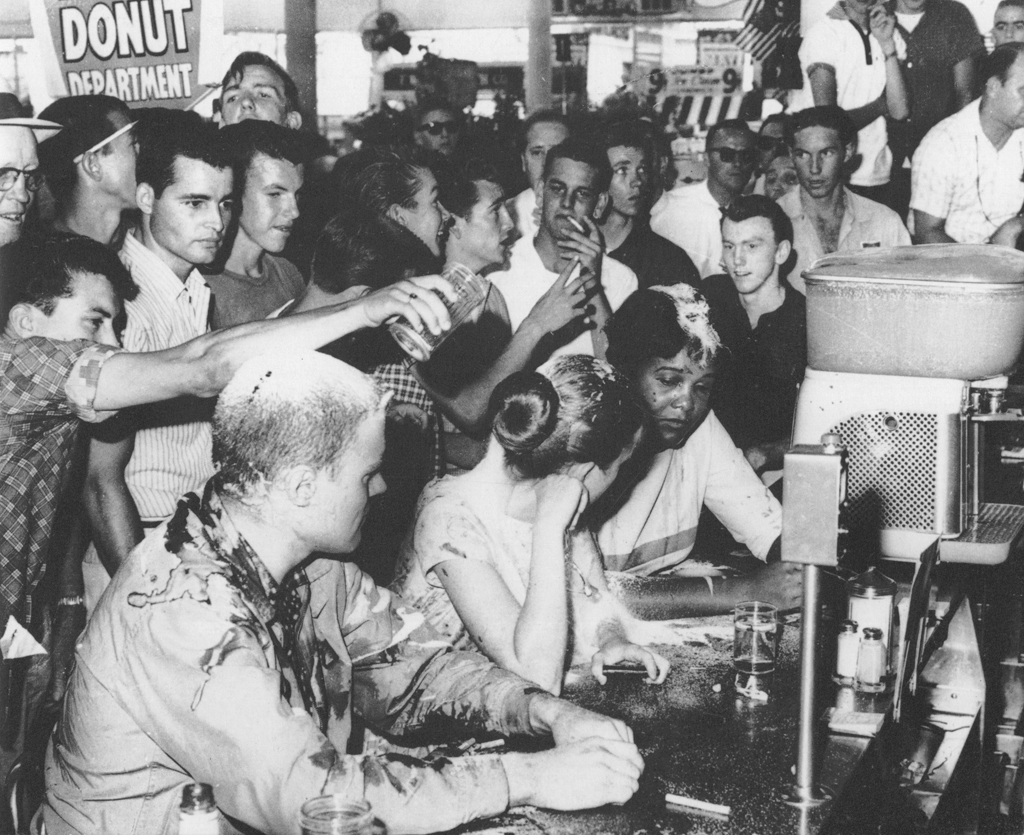
Suddenly I despise these lazy black people who have nothing better to do but sit around making life difficult for these hard-working white men who just want to have a meal during their hard-earned lunch break.
Because this is what annoys me with these hard-working people who get frustrated at protesters, saying things like 'you're destroying your own cause'. First of all, if you're saying that, you're probably the kind of person who has never protested in his entire life, and are by no means authoritative on the subject of protests. Second, you obviously don't understand much about psychology. Now, I apologise if it's Mr. Psychology Major Graduate reading this, but let me chuck a scenario in for you: Have you ever seen an advertisement, whether it be on TV or Radio, that is just so incredibly fucking annoying? Like serious, in your face, look at me, listen to this repeating, annoying sound, screaming right into your living room for a gratuitously long period of time? Those ads where they'll repeat a word over and over again at different lengths and volumes? Don't you ever watch an advertisement that is so blatantly annoying that you think to yourself 'how did they ever agree to air this ad? Or 'surely this is going to make people less likely to buy their product?'


And then you get PeTA, who do the most batshit crazy stuff ever that make them look like the biggest fools on the planet. You get people responding with 'PeTA are making animal lovers look bad' and all that.

PeTA may be obnoxious, but that doesn't change anything, little boy.
Well guess what? advertising agencies and PeTA's marketing team understand psychology a lot better than you do, and what they both understand is something you haven't thought about: you may find it annoying right now, but here's the beauty part: that doesn't matter. What matters is that an annoying advertisement stands out more than its subtle, friendly counterpart, thus people will remember it - that's the key word: remember. 10 years from now, you won't remember how annoying the ad was, but you will remember the product. Likewise, PeTA understands that 10 years from now, you may or you may not remember all the stupid things PeTA used to do and say, but you will remember all the horrifying facts about animal treatment they forced you to face. You may think that they're destroying their own cause, but really, that's just something your brain wants to convince of you in order to avoid hearing the message of what they're saying. As David Wong, who is practically the Socrates of the 21st century has put it, 'the human mind is a miracle, and never will you see it spring more beautifully into action than when confronted with proof that it needs to change. Ask any addict.' The same logic applies here, except it's not Alcoholics Anonymous telling you to stop drinking, it's Carl's Jr telling you, in the most obnoxious; condescending way possible to eat their burgers, or PeTA telling you to stop wearing the skin of tortured animals. You can criticise their methods all you like, but you can't criticise the fact that you probably like their burgers, or that you are inflicting unimaginable suffering on an innocent animal.

Above: symbolic depiction of a Carl's Jr TV ad
playing on my T.V
If Psy's lyrics start getting political, shit's
gonna escalate real quick
All this psychology applies with protests too. I enjoy protesting – not just for the cause, but for the whole atmosphere. It's great, but I have news for you: shit never got done with a peaceful protest. This is something NZ'ers don't understand. All our protests are flimsy compared to what happens in other countries. Even South Korean youths, who are normally too pacified on soju and K-pop to protest, finally do go on a march, things get violent. I was ashamed to be a Kiwi. We simply don't understand the power of hostile civil disobedience. We don't understand because we grew up in school learning about Martin Luther King's passive resistance, instead of Nelson Mandela's terrorist activities. 'But exactly, what about Martin Luther King,' you say? 'He was a peaceful protester and succeeded!' Well, here's some history for you. First of all, MLK's protests were not 'peaceful' by today's standards, now that we can't even perform similar blockades without upsetting working people. Secondly, Martin Luther King takes credit for civil rights victories of the 60's, but he was only part of a duality of civil rights leaders that helped bring forth change. His semi-evil twin, Malcolm X, played a huge part in the
revolution, but for very different reasons. While King was a cute, cuddly gentleman who preached empowering, Christian inspired words of equality and persistence, Malcolm X was a racist, radical Muslim, advocating racial separatism and violent resistance, and the U.S government was scared of him. As historian Dan Carlin discusses in his podcast 'Spectre of Dissent', governments are not afraid of protesters calling for change. What scares them is the idea of an immobilised faction of the population, ready and willing to do whatever they can do to challenge the system. That's exactly what the Black Panthers did.

Now, I'm not advocating violent resistance. I'm not advocating violent protest. But I do advocate annoying protest. I advocate annoying resistance, and I believe as vigilant citizens in a democratic society, we should all practise our right to be as annoying as hell. When somebody gets annoyed, they eventually get over it. But if they are faced with the truth, you can deny it, but they can't forget about it. One of the reasons so many of us are afraid to be outspoken and honest, is that we are afraid of annoying people. If we can make it past this massive evolutionary hurdle, the human race may very well develop into a more enlightened species, albeit a somewhat more annoying one. Of course, we'll never overtake possums on the annoying factor, but at least they know how to be cute.