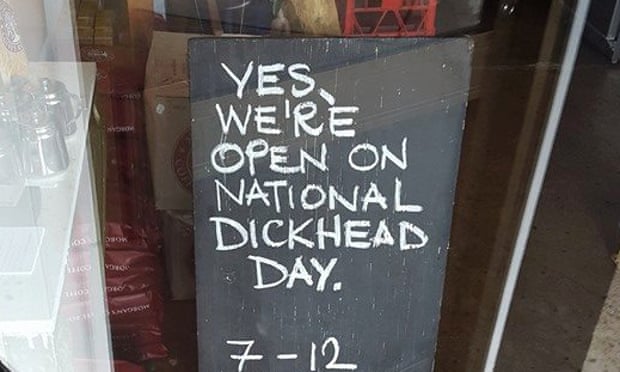
'Ignore him', I used to say. How else can you deal with with his kind? But every man has his limits. Regardless of what you think of Mike Hosking, he's TV's equivalent to a restless child kicking his legs
tirelessly against your backrest on a plane. He has the out-of-touch
fairytale worldview of Denny Crane, the overbearing squawk of Bill
O'Reilly and the narcissism of Sean Hannity – all of which he
would surely consider compliments. He's the kind of man who talks
more than he listens, who speaks solely for the purpose of hearing
his own voice. He's the man who can stride confidently into the
losing side of a debate, knowing he will be defeated, yet unable to
pass up the opportunity to hear himself talk louder than he can
think.
But as his hairs go
grey and his wrinkles come to stay, he's growing out of his dynamic
broadcasting shell into the kind of man he'll remain for the
rest of his days: a cranky old fart from another time, and by that I mean no offence to all the other old-timers who happen to be cranky. I have no problem with that, as long you aren't dominating half of the mainstream media.
The reason I'm
saying this is because of a recent post he's made on Facebook, featuring a series of some 40 memes, all bearing the phrase 'How Did
We Survive Growing Up?' followed by little anecdotes of life
growing up 'in the good ol' days' - The wonderful cold-war years
before the softening effect of iPads, video games and political
correctness. In one sense they are quite cute, at other times
relatable, and surely nostalgia-inducing for many of us.

For people like
me, it's just another Lutheran door-nailing in Hosking's quest to
show young people how much they suck. Had he posted these 5
years ago, I would've drank it up. Absolutely - kids these days are
spoilt, entitled creeps with no idea how good they have it. Most
importantly, it being the centre-piece of the post, he's shown us how
tough things were back then. Baby Boomer kids understood the world was a dog-eat-dog world of toughness, respect and the rule of law, enforced by the hammer of justice, which could come cracking on your head at any time you let your guard down.
Except it wasn't.
Unlike Hosking, I am a fan of history, including New
Zealand history (I know Hosking isn't, having accused Waitangi of
being 'too much history', which he evidently has a problem with). In
fact, part of my NCEA history studies involved meeting senior citizens and inquiring as to what life was like 'back then' (In Hosking's case, the early 1970's). What conclusion did I come to?
That life was pretty
good. New Zealand's economy was protectionist, which essentially means that
if you were a well-off white male youth (eg, Mike Hoskings) then
getting a job and education was as easy as making toast, because this was before
the globally competitive, neo-liberal state of the post-Rogernomics
reforms of the late 80's. Before this, New
Zealand had one of the most tightly regulated welfare states in the
world. Not only that, our 1950's post-war economy was benefitting unseen by
most of the world, which still laid in rubble from the war. Letting alone the 'rockstar economy' of today, we were living the Kiwi dream in almost every sense:
 |
| Instead of just watching it with an unbearably taunting theme that literally sings 'naa-na-na-na-naa!' |
In the 70's, home ownership was higher. In Auckland you could get a low-mortgage quarter acre section
for less about $50,000 with a $2,000 deposit and 3% interest rate. There was more state-housing (it wasn't a dirty word back then). Working was easier. Unions were prolific, compulsory, and made most working man's life a breeze, along with no zero-hour contracts - together allegedly
give workers less motivation to work harder, thus we were lazier.
No-one lost sleep to job security, especially with council and state
jobs, which were more plentiful due to zilch privatisation. Breaks
were longer. Few foreigners competed with Kiwis for jobs. High School
leaving age was lower. Classes were smaller. School was shorter and
easier, with School Certificates at fifth form (Year 11) and
University Entrances at Sixth Form (Year 12). In short, you required
the equivalent of NCEA level 2 to enter University, not NCEA Level 3like today, yet that's not a fair comparison, because school back
then was far less difficult than anything produced by NCEA. Standards
are far higher. Scientific subjects like math and bio were less common. But most importantly, University was tuition-free. As the website Craccum states, 'there were no university fees, but most students were given a living grant - they were paid to study.'
 |
| "But debt encourages students to succeed!' |
Of course, you might argue that kids today are 'paid to study' because of Student Allowances, but that's not how we see it. We'll look at it in the sense that we've paid tens of thousands of dollars to study, and we are getting a bit back in the form of 'allowance', which sounds really generous, not something essential like a 'living grant.' Who'd imagine I'd use my allowance for anything important, like car payments, rent and food? Obviously I splurge it on an orgy of sex, drugs and sausage rolls.
Did somebody say sex, drugs and rock n' roll? That kinda describes the 70's well. Life was laid back. You could smoke anywhere, you could drink anywhere. You could drive for years without WOF or registrations (according to my Mum and her friends, who did this frequently). Drinking and driving was still popular (because people drank casually - they didn't binge), even though the breath check laws were enacted in 1969 (you could DUI of twice as much alcohol as today) Yet today's teens drink harder – Why? Because life is so easy as there's nothing to do but drink? If you believe that, you're Monty Burns level of out-of-touch. More likely it's because, if you believe what the government says - people today work and study harder than ever before, and we still maintain that drinking is a reward for hard work. The employed people I know drink more than the unemployed. (That being said, drinking today is more expensive, and our bottles come in smaller quantities - anyone who watched Once Were Warriors would know). There was less crime than today. There were more WINZ benefits. The rivers weren't as polluted. We didn't have to worry about the Ozone layer (or in Mike Hosking's logic, we were tough enough to deal with a bit of skin cancer).
Did somebody say sex, drugs and rock n' roll? That kinda describes the 70's well. Life was laid back. You could smoke anywhere, you could drink anywhere. You could drive for years without WOF or registrations (according to my Mum and her friends, who did this frequently). Drinking and driving was still popular (because people drank casually - they didn't binge), even though the breath check laws were enacted in 1969 (you could DUI of twice as much alcohol as today) Yet today's teens drink harder – Why? Because life is so easy as there's nothing to do but drink? If you believe that, you're Monty Burns level of out-of-touch. More likely it's because, if you believe what the government says - people today work and study harder than ever before, and we still maintain that drinking is a reward for hard work. The employed people I know drink more than the unemployed. (That being said, drinking today is more expensive, and our bottles come in smaller quantities - anyone who watched Once Were Warriors would know). There was less crime than today. There were more WINZ benefits. The rivers weren't as polluted. We didn't have to worry about the Ozone layer (or in Mike Hosking's logic, we were tough enough to deal with a bit of skin cancer).
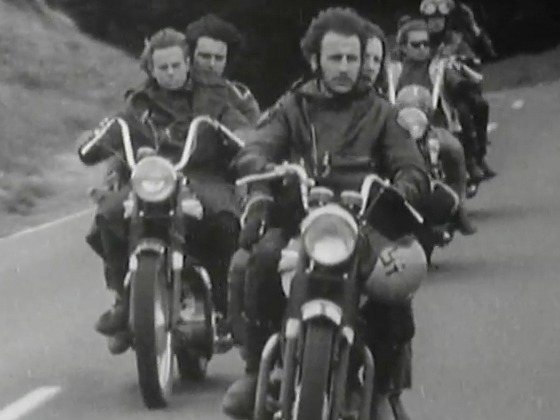 |
| And it was the only time in our history that a biker-gang leader could look like Ringo Starr |
Of course, not
everything was great. Gender equality wasn't yet a 'thing', nor was LGBT acceptance (I prefer the term acceptance over the more dubious tolerance). We were still hooked to Europe instead of embracing Asia-Pacific. Oil shocks were a
problem. The All Blacks hadn't quite perfected the Haka.
But that's missing the point of his post, isn't it? The point is that life was about discipline and respect! Kids back then gave no excuses and parents took none. Kids these days are a bunch of spoilt, whiny PC brats who don't know how good they got it, by gum!
But that's missing the point of his post, isn't it? The point is that life was about discipline and respect! Kids back then gave no excuses and parents took none. Kids these days are a bunch of spoilt, whiny PC brats who don't know how good they got it, by gum!
Here are my problems
with Hosking's post, and there are a few, so I'm not sure where to
start.
First of all, to all the Mike
Hoskings out there, here's my question. If you don't like this
spoilt generation, then what are you going to do about it? What can you
do? If a generation feels hard-done-by, for whatever reason (student
costs, housing market, etc), telling them they shouldn't feel bad
isn't going to do anything.On his show Seven Sharp, Hosking confessed he is sick of hearing all these news stories of 'people who are hard done by', arguing that most Kiwis, according to statistics, are happy with their lives.
Okay Mike, so what are you trying to say? Minority views don't matter? Of course you're not saying that - no one's that dickish. What you're saying is that lefties complain about things most people realise aren't a problem!
Well guess what? That doesn't matter! Whether or not you think they deserve to feel ripped off will not make a dent of difference in whether or not they will feel ripped off. What matters is that they already do feel like things are tough, and the only thing your bitter throwback to the glory days will accomplish is make you look like an out of touch asshole.
Okay Mike, so what are you trying to say? Minority views don't matter? Of course you're not saying that - no one's that dickish. What you're saying is that lefties complain about things most people realise aren't a problem!
Well guess what? That doesn't matter! Whether or not you think they deserve to feel ripped off will not make a dent of difference in whether or not they will feel ripped off. What matters is that they already do feel like things are tough, and the only thing your bitter throwback to the glory days will accomplish is make you look like an out of touch asshole.
 |
| I'll tell you what I'll do about it - I'll write a letter to The Face Book, I will |
Here's another double-edged sword: It's called Nostalgia. While Mike Hosking was drinking
full-cream milk and swimming in clean rivers in the early 70's, I bet you the
generation before him were ranting about how easy he has it. Back in
their days, they had to deal with tedious little things like.. I
don't know, the Second World War? How about the Great fucking Depression? Likewise, when they were all kids in the 1920's, their
parents were probably telling them the horrors of a nation torn apart by The
Great War and... Cholera. If that was a problem back then, I don't know. Whatever. The point is - what does this mean? Is it a sign
that the world is progressively getting better in every single way
possible? Or perhaps it's just a sign that human beings produce a
little thing called 'Nostalgia' which automatically dictates that the
past was either:
- Incredibly awesome
- Incredibly shit
 |
| Or both at the same time, in the case of G.G. Allin |
Alternatively, Mike Hosking is by all intensive purposes, an entitled,
bludging hypocrite. The 70's had a much stronger welfare state than
today, to which every single New Zealander benefited from, whether they'll admit it or not. He'll accuse this digital generation of
having it easy – why, because we have more technology? More exotic
food? As a self-confessed 'money person' like Hosking should know,
all the readily available technology in the world is not going to
make the young generation any single bit happier. I - okay, let me put it this way: Money certainly
hasn't made him happy.
Teen suicide, depression and drug usage is up, and Mike's only retort is that young people are too lazy,
whiny and entitled to get off their fat asses and stop complaining. Guess what: there's a reason you need a doctorate to become a psychiatrist. One
of the first things a psychiatrist learns is to differentiate a
problem from a symptom. Evidently, people with socially conservative
mindsets have not learnt to make this distinction. This kind of
mindset is the equivalent of your doctor investigating your sore
stomach, and saying 'my diagnosis, you're in pain'.
 |
| Yes, I just went there, |
But Joe, why are
you taking this so personally? It's just a bit of harmless throwback
to the past! It's just a light-hearted observation! Why so serious?
Well I wouldn't take this seriously if people on the other side didn't. Evidently there is a large portion of this country's ageing elite who look at young people today with shame. Why? It's not the dirty music, teen pregnancy, drug and alcohol abuse, suicide and depression rates. No, it's entitlement, political correctness, laziness and whininess:


Ironically, baby-boomers, like the ones above are the very same people who raised this 'spoilt, entitled, PC' generation of today. In that sense, aren't the baby-boomers to blame? If they hate this generation, why did they give birth much more than then next generation?
Fortunately, there are people who have pointed this out, but as it turns out, it's actually the government and technology's fault.
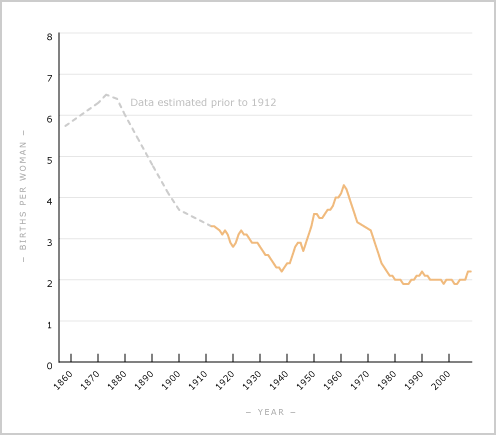 |
| 'I'm entitled to this many children!' |

It's a bit ironic coming from a generation who preach about family values and the importance of responsibility, but I'm not here to play the blame game. The point is this: If Hosking and friends have these issues with young people, then they
are clearly so out of touch with young people that it insults me that
they feel entitled to comment on them. It's almost as bad as the time David Seymour claimed sufferers of depression need to 'harden up'. If you're a wealthy
middle-aged broadcaster donning crocodile-skin shoes and driving a
Maserati, then I have a suggestion: Find something better to complain
about. Keep on complaining about people backing into your car, and
the horrors of having to start your summer holiday with a trip to the panelbeaters. Life is the 21st century sure is difficult,
isn't it?
 |
| Call it the 'Miserati' |
 |
| The spoilt, entitled generation (left) and the decent, hardworking baby-boomers (right) |
So you grew up
learning you had to be the best in the sports team? Sure, but I grew
up learning 'pick on someone your own size'. (Thanks, Rocko's Modern Life', you taught me everything I needed to know) It goes back to a very
sensible observation which many of us find hard to do: putting
ourselves into the shoes of other people. It's easy to do that when
it's your classmate, or your workmate, but when we're comparing
different periods of time, we forget one very practical piece
of understanding, which I, as a fan of history, can say: the world you lived in is not the world of today, whether you like it or
not.
This all boils
down to something that frustrates me immensely: It's prejudice. This
is all just prejudice in another form. It's not just a harmless
throwback, it's a stupid characterisation that somehow one generation
is superior to another, and before you retort 'that's not the intention', well, once again: that doesn't matter, because it's definitely the end result, ready to be
consumed by the regressive masses which form your viewer base. It's
exploitative - It exploits people's regressive instincts, as well as their
stupidity, and regressive thinking will not
make the world a better place, no matter how much you wish it will. There's a reason we instinctively think of the past with better feeling than the future. I remember some writer hypothesised that the reason young geeks like science fiction more than adults, is because young geeks aren't afraid of the future - in all it's scientific and social
advances. Youth embrace the future, no matter what it brings.
 |
| Although to the credit of the baby-boomers, they did a fine job in warning us about the dangers of Big Brother, and they did accurately predict the 80's would bring women in tank-tops and men in bondage suits. |
But we all have
things we like about the past. I'm only 22, I already look at the
kids today and think they aren't as good at socialising, or they
spend more time on the computer, than I did. Or they don't go to the
beach enough. Whatever. But I'm sorry, I'll just never be enough of a
high minded asshole to think that my experiences as a youth are
somehow representative of that whole generation, and that I possess the omniscient knowledge that those qualities are precisely what is
required of this new generation that I know nothing about. That was quite a mouthful, so I'll just quote Don Draper, of all people: 'Change is neither good nor bad. It just is.'
Please, swallow your
pride and acknowledge it.
 |
| Take your time, Mike |